
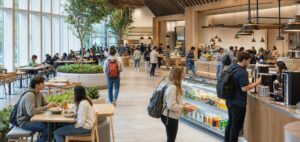
College and university foodservice has always been more complicated than it appears.
A campus may look like a single account, but it contains multiple populations, service formats and eating occasions. A first-year student living in a residence hall has little in common with a commuter stopping between classes, an athlete looking for protein after practice or a graduate student staying on campus late.
That was true when we last studied the market in 2017. It remains true today.
What has changed is how difficult it has become for one traditional dining model to serve all those needs.
Students no longer organize every day around a predictable sequence of classes and meals. Their schedules can include in-person classes, asynchronous coursework, jobs, athletics and campus activities. Some spend most of the day on campus. Others arrive for one class and leave.
The opportunity is no longer simply getting more students into the dining hall. It is making campus foodservice relevant wherever and whenever students decide to eat.
The Campus Is a Collection of Occasions
Dining halls remain important, particularly for residential students. But they are now one part of a broader foodservice system that can include convenience stores, coffee shops, food courts, branded concepts, kiosks, mobile ordering, delivery and grab-and-go locations.
Each format solves a different problem.
A dining hall provides variety and community. A campus convenience store offers speed and extended access. A coffee shop can function as a workspace. Grab-and-go helps students fit food into schedules that do not align with traditional meal periods.
For operators, the challenge is deciding which formats deserve investment—and how to manage them without adding unsustainable complexity.
Familiar Pressures Have Become More Consequential
Many of the issues identified in our earlier research have not disappeared. Operators still need to control food and labor costs, recruit and retain employees, respond to changing student preferences and compete with off-campus restaurants.
Students still expect variety, convenience, recognizable brands, global flavors and options that reflect health, wellness and social responsibility. But delivering all of that consistently has become harder.
That changes what operators need from suppliers. An interesting product is not enough. It must also fit existing equipment, reduce preparation demands, work across multiple formats and deliver acceptable economics.
The Next Model Must Be More Flexible
The next college dining model will not be defined by one concept or technology. It will be built around flexibility: flexible meal plans, service hours, portions, locations and products.
Manufacturers should therefore look beyond the size of the C&U market and ask more useful questions:
Where are students eating now? Which occasions are underserved? What prevents operators from meeting those needs? And where can a product improve access, execution or value without creating more complexity?
College foodservice has not abandoned its traditional challenges. It has added new operating realities around them. The growth opportunity belongs to suppliers that understand both.
Get practical foodservice intelligence delivered to your inbox. Our subscribers receive original research, industry analysis, blog updates, and announcements on new studies. Sign up to receive our communications.
Recent Comments