
Foodservice companies often discuss breakfast as though it were a single market. It is not.
The commuter buying coffee at 6:30 a.m., the remote worker eating at 10:00, the college student grabbing something between classes and the family ordering brunch on Sunday are all participating in the morning occasion—but their needs are entirely different.
Manufacturers that treat them as one breakfast consumer will miss where the real opportunities are developing.
The Morning Routine Has Fragmented
Breakfast once benefited from relatively predictable routines built around commuting, school and traditional work schedules. Those patterns have become less consistent.
Some consumers leave home early. Others work remotely several days a week. Many delay their first meal, replace it with a beverage or eat something small across multiple occasions. Breakfast also competes with food prepared at home, which is often faster and less expensive than visiting a restaurant.
The issue is not whether consumers still eat in the morning. It is whether operators can give them a compelling reason to purchase.
Manufacturers need to know which consumers are buying breakfast away from home, when they are buying it and what causes them to choose one channel over another.
Convenience Means More Than Portability
A handheld product is not automatically convenient.
True convenience can mean quick preparation, easy mobile ordering, minimal mess, reliable availability or a product that travels without losing quality. For operators, it also means low labor, manageable holding times and limited waste.
The best breakfast innovation solves both sides of the equation. It fits into a consumer’s routine while fitting into the operator’s kitchen.
That may require products designed for grab-and-go, advance ordering, self-service or flexible preparation across multiple dayparts. Manufacturers should not simply ask whether an item tastes good. They should ask whether it survives the actual morning experience.
Value Must Be Considered Across the Entire Occasion
Consumers rarely evaluate a breakfast item in isolation. They evaluate the complete purchase: food, beverage, portion, speed and price.
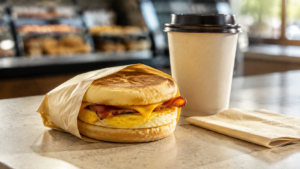
This creates an opportunity for manufacturers to help operators build combinations instead of selling individual products. A breakfast sandwich may become more appealing when bundled with coffee. A smaller item may work as an add-on, while a protein-forward option may justify a premium.
Understanding which attributes encourage trade-up—and which simply make breakfast feel overpriced—is essential.
Growth May Happen After “Breakfast” Ends
Operators may also be limiting the opportunity by confining breakfast foods to traditional morning hours.
Egg sandwiches, breakfast burritos, bakery items and coffee-based beverages can satisfy afternoon snack, late-night and comfort-food occasions. But all-day availability does not mean placing the same breakfast menu in front of consumers for twelve hours. The products, portions and messaging may need to change as the day progresses.
Manufacturers can help operators identify where familiar breakfast ingredients can create new occasions, limited-time offers and cross-daypart applications.
The future of breakfast will not be won by adding another sandwich to the menu.
It will be won by understanding how mornings are changing—and designing products, formats and offers around what consumers and operators need at each distinct moment.
Get practical foodservice intelligence delivered to your inbox. Our subscribers receive original research, industry analysis, blog updates, and announcements on new studies. Sign up to receive our communications.
Recent Comments