
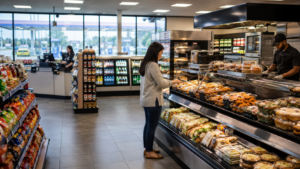
For years, convenience-store foodservice was discussed as an emerging opportunity. That description is now outdated.
The strongest c-store operators have already moved beyond roller grills and emergency snacks. They offer made-to-order sandwiches, premium coffee, fresh bakery items, fried chicken, salads, specialty beverages and even complete meals. Some now compete credibly with quick-service and fast-casual restaurants.
But earning permission to sell food is different from winning the next meal occasion.
The Competition Is No Longer Just Other C-Stores
C-stores once occupied a relatively distinct position: immediate, portable and convenient. Today, nearly every foodservice competitor is pursuing those same advantages.
QSRs have expanded snacking, value offers and digital ordering. Coffee and beverage concepts compete for morning and afternoon traffic. Grocery stores offer prepared meals, while delivery makes restaurants nearly as accessible as the store down the street.
Convenience is still an advantage—but it is no longer a strategy.
To win, c-stores must give consumers a reason to choose them when they have other options. That may come from speed, value, product quality, distinctive beverages, proprietary menu items or combinations of all five. Simply adding more food will not be enough.
Growth Will Come From Occasions, Not Categories
The next stage of c-store foodservice growth will be determined less by whether an operator sells pizza, chicken or breakfast sandwiches and more by the occasion each product can capture.
Can the store become a planned breakfast stop rather than an incidental coffee purchase? Can it turn an afternoon beverage visit into a snack occasion? Can grab-and-go products compete with a drive-thru lunch? Can the store earn consideration for dinner—or provide something consumers take home for later?
These questions matter because consumer expectations change by daypart. The definition of value, acceptable wait time, portion size, portability and freshness is not the same at 7 a.m. as it is at 6 p.m.
Execution Will Separate Ambition From Growth
Our 2025 research found that c-store operators were prioritizing grab-and-go expansion, faster service, broader variety and higher-quality offerings. Those ambitions create opportunity for manufacturers—but also a warning.
C-stores operate with limited space, uneven foodservice expertise and persistent labor constraints. A product that looks compelling in a presentation may fail if it requires too much preparation, creates waste or cannot be executed consistently across stores.
Manufacturers must understand not only what consumers want, but what retailers can realistically deliver.
The Next Question Is Where to Place the Bet
The c-store channel is not one uniform market. Chains differ significantly in capabilities, customers, formats and commitment to foodservice. The winning product, daypart and support model will vary accordingly.
The opportunity remains substantial. But as competition intensifies, growth will require sharper answers: Which occasions are truly available? Which consumers can be converted? What prevents trial? Which innovations improve the experience without adding operational complexity?
C-stores have proven they can sell food.
Now they must determine which meals they have the right to win—and manufacturers must decide how they can help.
Get practical foodservice intelligence delivered to your inbox. Our subscribers receive original research, industry analysis, blog updates, and announcements on new studies. Sign up to receive our communications.
Recent Comments